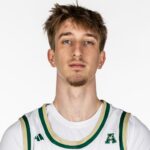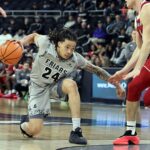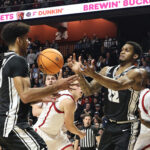
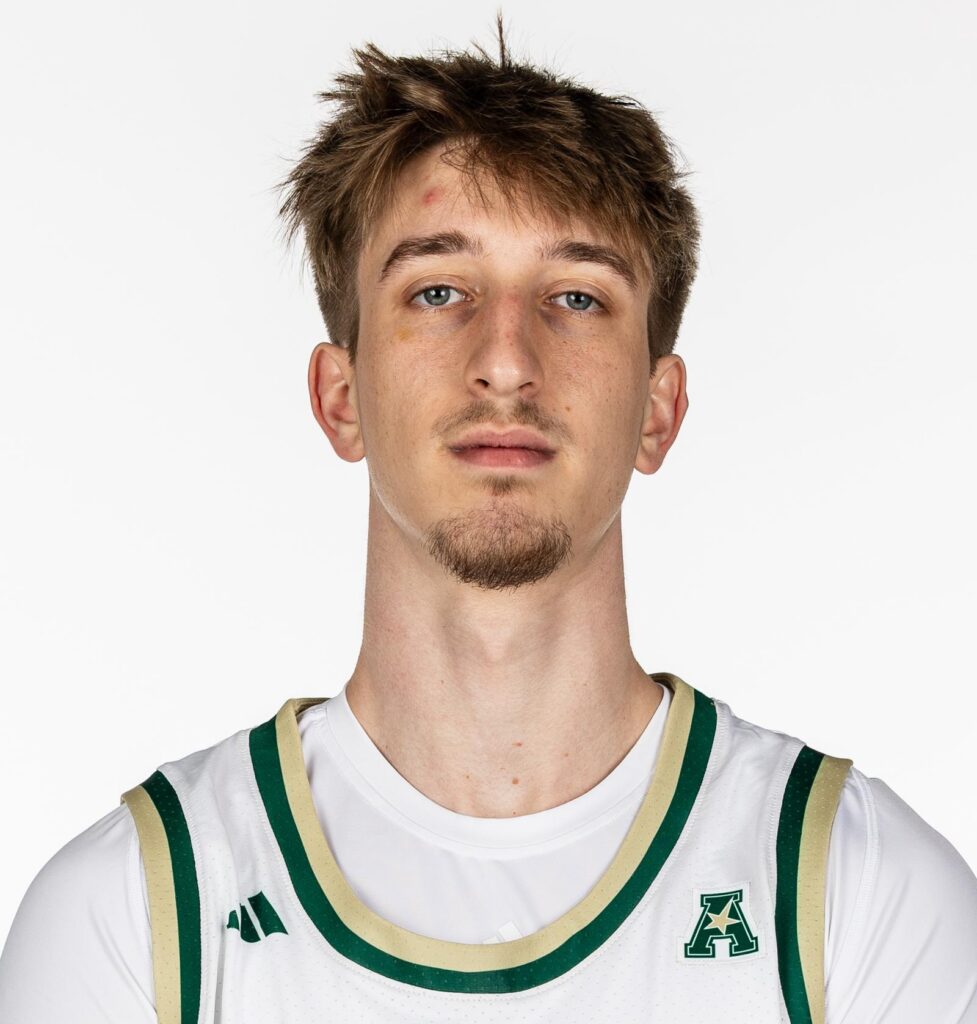
Joe Pinion (above) and Derek Simpson were both denied in eligibility case by U.S. District Court Judge Melissa DuBose
By KEVIN McNAMARA
Of all the duties charged to the NCAA, sponsoring equally competitive national championships may just be at the organization’s bedrock. This year the heavies in Indianapolis failed badly.
By changing its eligibility rules in June and excluding an entire class of athletes (high school class of 2022), the NCAA opened itself up to lawsuits from thousands of aggrieved 21 and 22 year-olds who felt they deserved a fifth year of eligibility. When many in the group expectedly sued, en masse, the NCAA refused to realize it had opened a can of worms that would endanger its focus on sponsoring equally competitive championships.
While a flurry of lawsuits weren’t resolved in time to dramatically effect this college football season, that is not the case in basketball. With the prospect of returning for a fifth year of play also linked to hundreds of thousands (or millions) of dollars in revenue share/NIL payments, who wouldn’t attempt to sue to gain that fifth year?
Sure enough, players across the country have lawyered up and lined up at their local and federal courthouses. Many, hundreds in fact, have secured preliminary injunctions against the NCAA. But many have also failed thanks to some judges who don’t appreciate (or give a damn) the inequity their rulings are creating. That’s placed the 2026-27 college basketball season in an upside down, uneven quandry where one team may have two key fifth-year starters while another couldn’t get their fifth year hopefuls cleared.
That will, unfortunately, be the case in the Big East this season. On Friday, Providence was preparing to practice at a local high school in Maui for next week’s Maui Invitational when a ruling was handed down back in Rhode Island against both Joe Pinion and Derek Simpson. Both players are enrolled at Providence, have practiced with the Friars for months and were awaiting a decision from U.S. District Judge Melissa R. DuBose, who just happens to hail from Providence and is a PC graduate.
DuBose rejected the player’s plea for a preliminary injunction against the NCAA, somehow claiming that their breach of contract claim (which has passed in many other courts nationally) would not past muster.
“Thus, given the record currently before this Court, the Plaintiffs are unlikely to succeed in demonstrating that the NCAA has breached the contract by denying them eligibility to compete with the Providence College Friars during the 2026-2027 season,” DuBose concluded.
“Because the Plaintiffs cannot demonstrate a likelihood of success on the merits of the break of contract claims, the Court declines to engage in the remaining temporary restraining order factors.”
How DuBose could reach that conclusion while a different federal judge in Idaho, David Nye, disagreed makes little sense. In a case involving Boise State track athletes, Nye wrote that the NCAA did indeed breach the contract between athletes and its rule book.
“The court also found the relevant NCAA bylaw defining the five-year period of eligibility does not include the exclusion for students who exhausted eligibility under the previous policy, finding the organization likely breached the express terms of that provision, Bylaw 12.6. The NCAA has also failed to show the provision is ambiguous, according to the ruling, which also found the NCAA likely breached the implied covenant of good faith and fair dealing under Idaho law by violating the express terms of the bylaw.”
So how does one federal judge in Idaho plainly disagree with another in Rhode Island?
Make this make sense.
Pinion and Simpson had previously sought a temporary restraining order against the NCAA that DuBose denied. The played filed for a preliminary injunction a few weeks later with a different lawyer who had tried similar cases. Florida attorney Jesse Panuccio won a preliminary injunction in a Florida court for Denzel Aberdeen, a star guard for the No. 1 ranked Florida Gators.
Among the discrepancies in the decision was a definition of whether the athletes were “intended third-party beneficiaries” of the NCAA’s rule book. Panuccio claimed Pinion and Simpson were covered by the rule book. DuBose disagreed, which basically ended their claims of standing in the case.
SUBSCRIBE TO KEVINMcSPORTS TODAY!
“For Plaintiffs to demonstrate a likelihood of success on their breach of contract claim, they must first demonstrate that they are intended third-party beneficiaries of the 2026–2027 Manual agreed to by the NCAA and its member institutions,” DuBose wrote.
In Idaho, however, Judge Nye concluded those Boise athletes were covered. “The court found they are, in fact, third-party beneficiaries, pointing to language in the Manual discussing the goal of promoting the benefit of student-athletes.”
Ah, the benefit of student-athletes. That brings us away from the integral points of the law and towards the clear, wide-eyed, sensible decision that was missed here. It may not be DuBose’s position to be “fair” but Panuccio presented numerous examples of other basketball players around the country gaining eligibility. She even knew that another Friar, forward Elijah Saunders, is a party in a California case that cleared numerous athletes for this season.
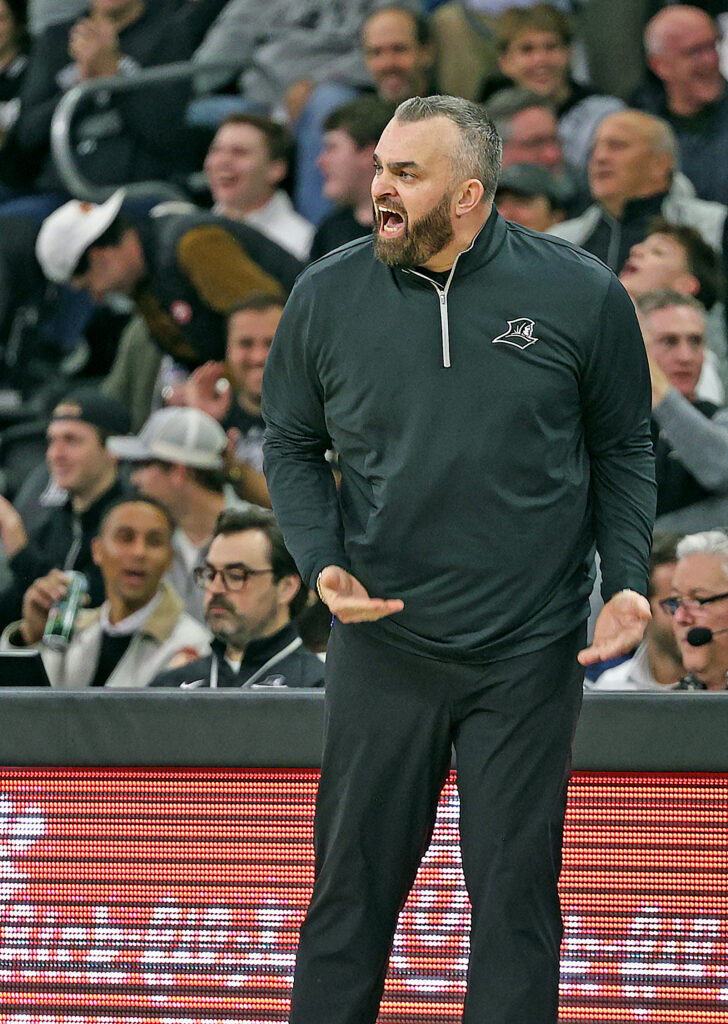
So Providence coach Bryan Hodgson will have Saunders eligible for the Maui Invitational but Pinion and Simpson will be sitting behind the bench in street clothes.
Any sense of eligibility standards in the Big East are also out the window. Georgetown’s Vince Iwuchukwu won his fifth year and is the reigning Big East Player of the Week. Rick Pitino can win another conference crown at St. John’s in part because leading scorer Keyshawn Hall (18.8 PPG) is allowed to play for his fifth school in five years.
Again, make it make sense.
How does this effect the Friars on the court?
It certainly doesn’t help the cause. Pinion is an elite 3-point shooter who made 109 treys at a 38% clip for Hodgson last season at South Florida. Providence is currently one of the worst 3-point shooting teams (27%) in the country so his addition would have been huge. Simpson was the Big 5 Player of the Year and an All-Atlantic 10 pick last year at Saint Joseph’s. The Friars have only one true point guard (Gavin Hightower) on the roster so not getting Simpson in uniform denies a needed luxury.
So how does one federal judge interpret a case one way and another the opposite way? We’ll leave that to the lawyers in the crowd but the NCAA is running neck and neck with the lack of legal consistency in the blame game. Once it saw that competitive equality could be at stake in its highest profile event – the Final Four – the wise thing to do was to grandfather the entire Class of 2022 and grant the fifth season for all. That will not happen, however, and players like Pinion and Simpson are left wondering what they did wrong.